
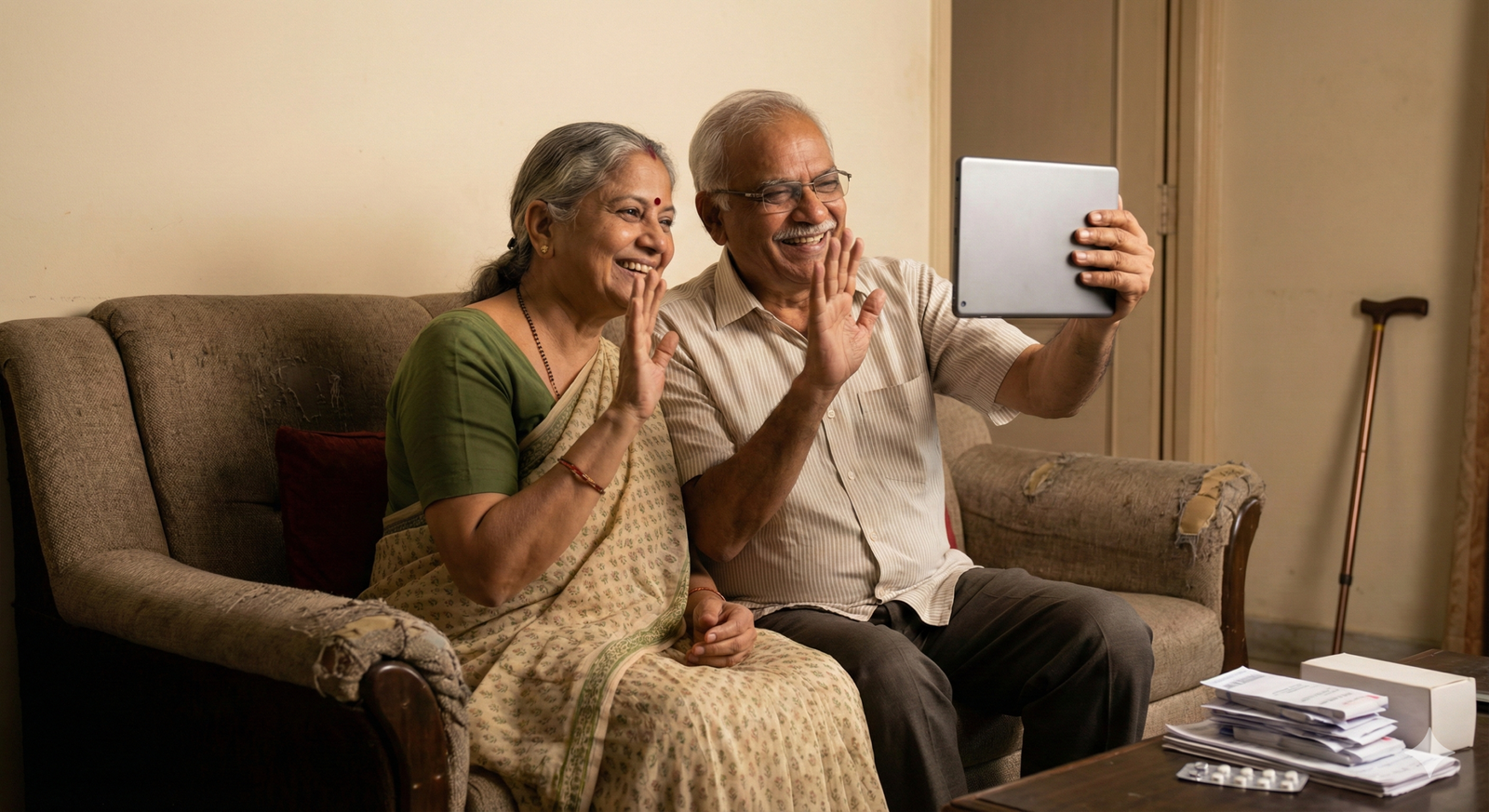
The smile is for the camera. But what happens after the video call ends?
"Sab theek hai, beta. Don't worry about us."
If you are an NRI, this is likely the most common sentence you hear. You ask about their blood pressure? "It's fine." You ask about that knee pain? "Just old age, nothing new." You ask if they are eating well? "Of course."
But then, you visit India after a year. The shock hits you. Dad looks frailer. The house, usually spotless, has dust in the corners. Mom winces when she stands up. You realize the terrifying truth: They have been lying to you.
They aren't lying out of malice. They are lying out of love. But this "Protection Paradox" is dangerous. Today, we decode why Indian parents hide their health issues and give you a checklist to spot the signs from thousands of miles away.
The "Burden" Narrative: Why They Hide the Truth
To solve the problem, you must understand the psychology behind it. Indian parents are culturally wired to be providers, not receivers. When the roles reverse, it attacks their sense of self-worth.
"They know you are busy building a career in a foreign land. They fear that one complaint about chest pain will make you drop everything, spend thousands of dollars on a flight, and jeopardize your job. So, they suffer in silence."
There are three main fears driving this secrecy:
- Fear of Losing Independence: They worry that if they admit they can't manage, you will force them to move, hire a stranger (maid), or worse—put them in a 'home'.
- Fear of Being a Burden: They don't want to be the reason you are stressed or distracted from your children and career.
- Fear of Doctors: Many seniors avoid doctors because they fear the diagnosis. "If I don't check it, it doesn't exist."
The Video Call Audit: What to Look For
Since you cannot rely on their words, you must rely on your eyes. Your weekly WhatsApp video call is not just a chat; it is an inspection. But you have to be subtle.
Next time you call, stop looking at their faces. Look at everything else.
1. The Environment Check:
Is the house cluttered? Are there piles of unopened mail or unwashed dishes in the background? A messy home in a previously tidy household is the #1 sign of cognitive decline or physical fatigue.
2. The Clothing Check:
Are their clothes loose? Baggy collars or wristwatches sliding down the arm indicate rapid weight loss, often a sign of undiagnosed diabetes, cancer, or simple malnutrition (cooking is too tiring).
3. The "Sit-to-Stand" Test:
Ask them to go get something from the other room while on the call. Watch how they stand up. Do they need to rock back and forth? do they grab the armrest? Mobility issues are the leading cause of falls.
4. The Repetition Loop:
Do they tell you the same story they told you last week? Do they forget that you told them about your promotion yesterday? Short-term memory loss is an early dementia marker.
5. The Social Withdrawal:
Ask, "Did you meet Sharma uncle this week?" or "Did you go to the temple?" If the answer is consistently "No, I didn't feel like it," depression or hearing loss (embarrassment in groups) might be the cause.
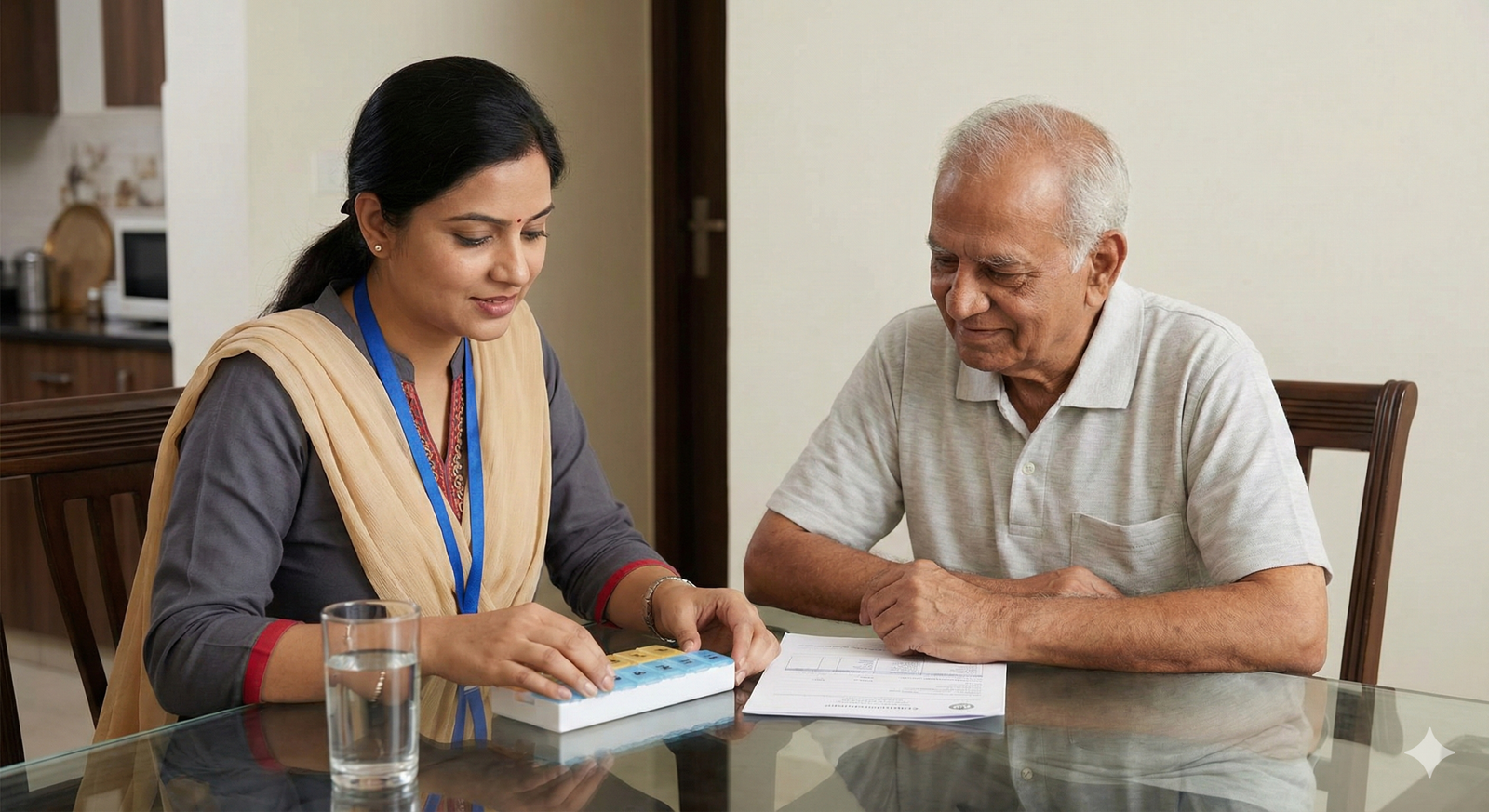
Professional oversight removes the emotional burden from the conversation.
How to Break the Cycle (Without Being the "Bad Guy")
If you confront them directly, they will get defensive. "I am fine! Stop nagging me!"
This is where the "Third Party" Advantage comes in. You need someone on the ground who isn't "family" (so they don't feel guilty burdening them) but is "trusted authority" (so they listen).
Enter the Sahayak (The Professional Intercessor)
At Blaze Elder Care, we act as the neutral third party. When we visit for a medical check-up, it’s not because "Beta thinks you are sick." It’s because "It’s part of the standard protocol."
We change the narrative:
- From: "Mom, you need to see a doctor because you look weak." (Resistance)
- To: "Mom, the Blaze team is coming for the monthly routine check-up. It's already paid for, so don't waste it!" (Compliance)
Our Sahayak Samarth Plan puts a trained care manager in their living room. We check the fridge for fresh food. We count the pills to ensure compliance. We verify the blood pressure. And we report the raw, unfiltered truth to you via our digital logs.
Stop Guessing. Start Knowing.
Your parents protected you from the harsh realities of the world when you were a child. Now, they are trying to protect you from the harsh realities of their aging.
But you don't need protection. You need clarity. Because with clarity, you can act. You can prevent the fall before it breaks a hip. You can catch the diabetes before it affects the kidneys.
Let us be your eyes and ears on the ground. Let us take on the "burden" so you can go back to just being their child, not their remote case manager.
Worried about what they aren't telling you?
Book a one-time "Home Health & Safety Audit". We will visit, assess their health and home safety, and give you an honest, independent report.
Schedule a Health AuditOr chat with us on WhatsApp first