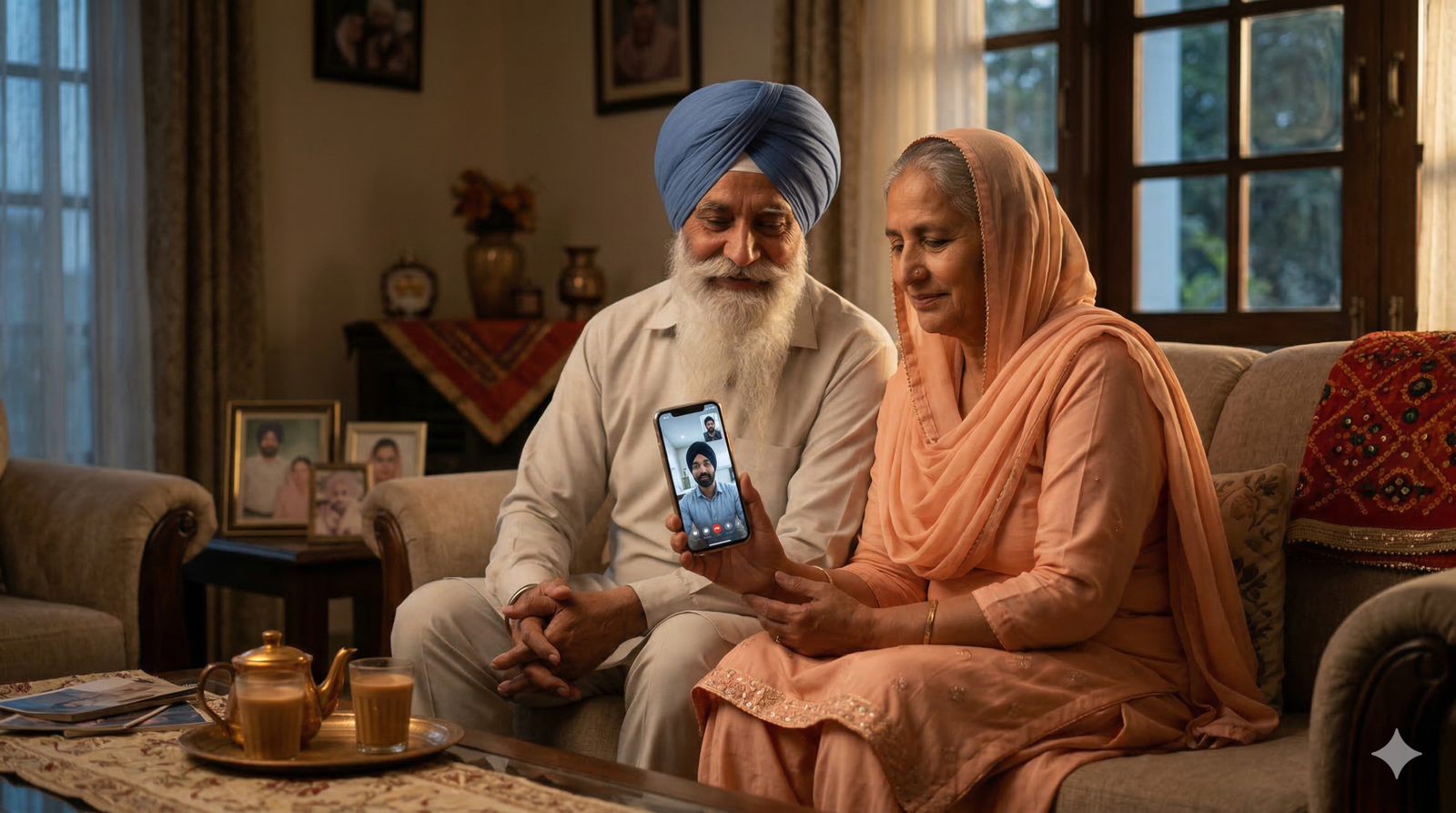
The 2 AM Phone Call Anxiety
It is a feeling almost every Non-Resident Indian (NRI) knows intimately. Your phone lights up at an unusual hour. The screen displays a familiar number from India. Instantly, your heart drops into your stomach, your pulse quickens, and a sudden wave of dread washes over you.
Is it Dad’s heart? Did Mom fall? When you answer and hear that it’s just a mistaken dial or a minor issue, the relief is profound—but the lingering anxiety never truly fades.
You are living the NRI dream. You have built a successful career abroad, secured a bright future for your children, and made your parents incredibly proud. Yet, beneath the surface of this success lies a persistent, heavy, and silent stress: Who is really taking care of your parents back home?
As we settle into our lives across oceans and time zones, our parents in India are growing older. The vibrant, independent figures who raised us are now navigating the complexities of aging in homes that suddenly feel too large, in neighborhoods that are rapidly changing, and in bodies that are slowly slowing down.
At Blaze Elder Care, we speak with hundreds of NRIs every month. The stories are different, but the emotional core is identical. It is a mix of love, helplessness, and a unique kind of guilt that comes with loving someone deeply from a thousand miles away.
This comprehensive guide is designed to bring those hidden anxieties into the light. We will explore the emotional toll of long-distance caregiving, expose the dangerous illusion of the “daily phone call check-in,” uncover the hidden medical and lifestyle risks your parents face, and explain why the traditional Indian family support system is no longer the safety net it used to be.
Most importantly, we will guide you from a state of reactive worry to proactive peace of mind.

Chapter 1: The Guilt of Distance – The Unspoken Burden of the NRI
The psychological phenomenon known as “NRI Guilt” is not a myth; it is a documented, deeply felt emotional reality. It is the friction between the life you have built and the life you left behind.
The “Sandwich Generation” on a Global Scale
Many NRIs find themselves in the “sandwich generation”—caught between the demands of raising their own young children and the increasing needs of their aging parents. When this dynamic spans across continents, the pressure is magnified exponentially.
You are expected to excel at your job in New York, London, or Toronto, be a present parent to your kids, and somehow manage the healthcare needs of your parents in Delhi, Mumbai, or Punjab.
The Milestones Missed
The guilt rarely stems from a single event. It is an accumulation of micro-absences:
Missing Diwali or Eid year after year.
Not being there to drive your father to his routine cataract surgery.
Watching your mother blow out birthday candles through a pixelated WhatsApp video screen.
The painful realization that every time you visit, they look a little older, move a little slower, and seem a little more fragile.
The Vicious Cycle of Worry and Overcompensation
To combat this guilt, NRIs often resort to overcompensation. You might buy them the latest gadgets, send expensive gifts, or fund luxury home renovations. While these gestures come from a place of deep love, they do not solve the fundamental problem: Money can buy comfort, but it cannot buy daily care, companionship, or safety.
“I bought my parents a luxury apartment in a gated community in Bangalore,” shares Rohan, a software engineer in Seattle. “I thought they were safe. But when my dad slipped in the bathroom, the fancy Italian marble didn’t help him up. And my mom, who has arthritis, couldn’t lift him. It took two hours for the building security to notice her frantic calls. That’s when I realized that real estate isn’t elder care.”
Rohan’s story is not unique. It is a stark reminder that infrastructure is not a substitute for human intervention and structured care.
Chapter 2: “Phone Call Check-Ins” vs. Real Care – The Illusion of ‘Everything is Fine’
In the digital age, we have fooled ourselves into believing that connectivity equals care. We rely on the daily 10-minute phone call to gauge our parents’ well-being.
“Haan beta, sab theek hai. Tum chinta mat karo.” (Yes child, everything is fine. Don’t worry.)
How many times have you heard this exact phrase? Indian parents are culturally conditioned to shield their children from stress. They view your success abroad as their ultimate achievement, and they will go to extraordinary lengths to ensure they do not become a “burden” or a distraction to you.
Why Parents Hide the Truth
Protective Love: They know you are busy and stressed with your own life. They do not want to add to your mental load.
Fear of Losing Independence: Admitting they need help feels like admitting defeat. They fear that if they confess their struggles, you will force them to move, hire an intrusive caretaker, or uproot their lives.
Normalizing Pain: Many elderly individuals believe that chronic pain, fatigue, and memory lapses are just “normal parts of getting older” and therefore not worth mentioning.
The Limitations of the Video Call
A video call is a highly curated interaction. When you call, they sit in their favorite chair, smile, and talk about the weather or the relatives. Here is what the camera doesn’t show you:
The Refrigerator: Is the food inside fresh, or are they eating expired, poorly reheated meals because cooking has become too exhausting?
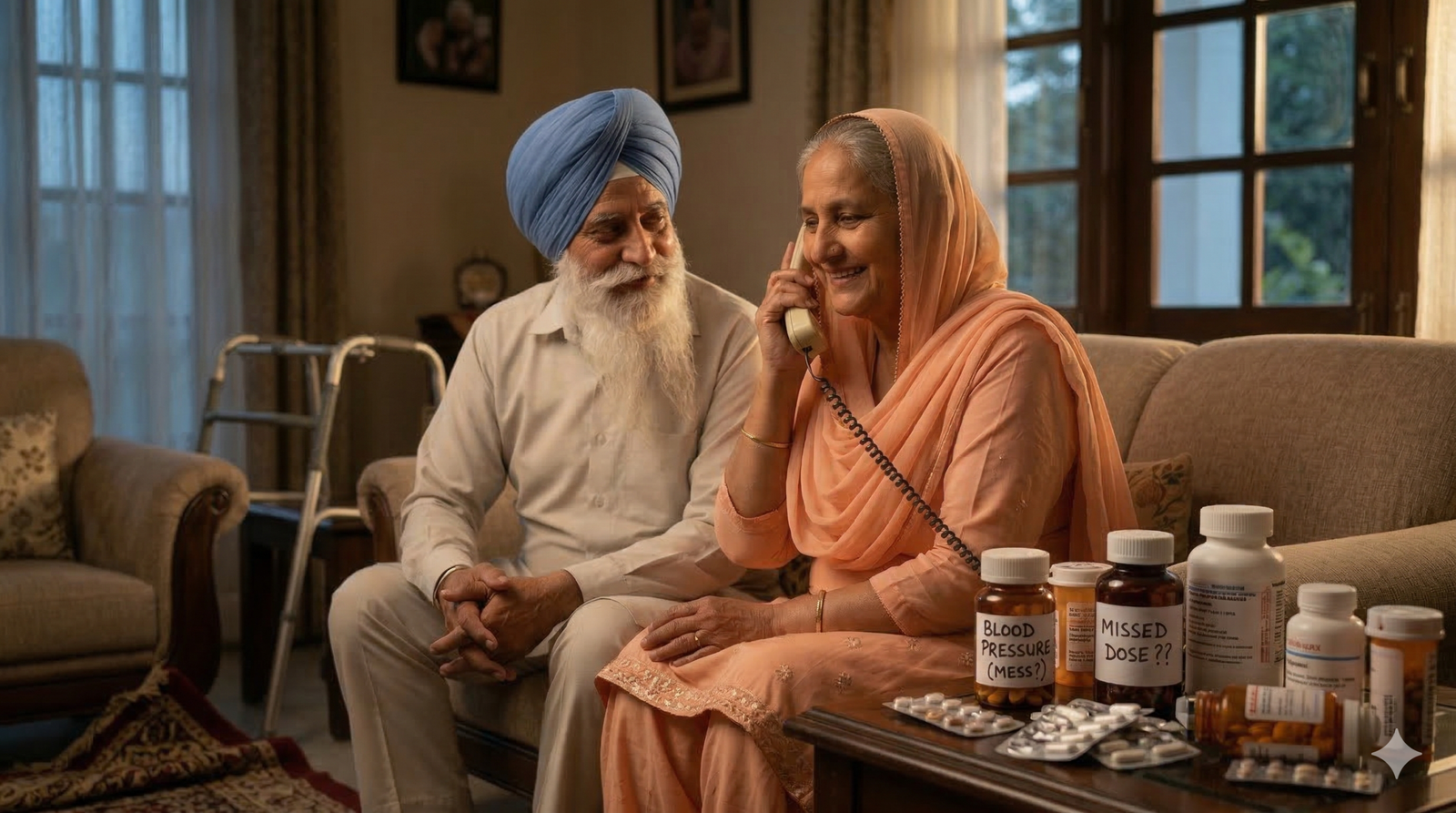
The Medicine Cabinet: Are the pills neatly organized, or is there a chaotic mix of expired medications, skipped doses, and double doses?
The Laundry Pile: Are they struggling to keep up with basic household chores because their joints ache?
The Silence: What happens the minute the screen goes dark? The crushing weight of isolation that sets in when the house is empty again.
The Checklist: Signs You Are Missing the Real Picture
If you are relying solely on phone calls, watch out for these subtle red flags:
Vagueness about health: When asked what the doctor said, they reply with a dismissive, “Oh, just the usual.”
Changes in voice or speech: A weaker voice, slurred words, or losing their train of thought mid-sentence.
Avoidance of video: Constantly making excuses for why the camera is off (e.g., “The Wi-Fi is bad today”).
Unexplained weight loss: Noticeable thinning in their face or collarbones when you do see them.
Repetitive storytelling: Telling the same story multiple times in one conversation, a potential early sign of cognitive decline.
The Reality Check: A phone call is a communication tool, not a caregiving strategy. It provides the illusion of control while leaving the actual physical reality of your parents’ daily lives completely unmonitored.
Chapter 3: The Hidden Risks in the Empty Nest
When aging parents live alone, the environment that once represented safety and comfort can slowly transform into a landscape of hidden hazards. Without a structured elder care system in place, these risks multiply exponentially. Let’s break down the silent threats facing your parents back home.
Risk 1: Falls and Mobility Issues – The Silent Epidemic
According to geriatric studies, falls are the leading cause of fatal and non-fatal injuries among older adults. In an aging body, a simple trip on a loose rug isn’t just a bruise; it can mean a fractured hip, hospitalization, surgery, and a permanent loss of independence.
The Fear of Falling: Often, the mere fear of falling causes seniors to limit their activities. They stop going for walks, stop visiting friends, and become sedentary, which ironically leads to muscle atrophy and increases the risk of falls.
Home Hazards: Dimly lit hallways, wet bathroom floors, high thresholds, and lack of grab bars turn a familiar home into an obstacle course.
Risk 2: Medication Errors – The Polypharmacy Problem
As people age, they typically accumulate prescriptions. Blood pressure pills, diabetes medication, cholesterol management, arthritis pain relief, and various supplements. This is known as “polypharmacy.”
Skipped Doses: Memory lapses or simply avoiding a pill because “it makes my stomach upset” can lead to dangerous spikes in blood pressure or blood sugar.
Accidental Overdoses: Forgetting they already took a pill and taking it again.
Harmful Interactions: Taking over-the-counter Ayurvedic or homeopathic remedies alongside allopathic medicines without consulting a doctor, leading to adverse chemical interactions.
Without a trained professional managing and dispensing medication, the pillbox becomes a ticking time bomb.
Risk 3: Nutrition and Daily Living – The Energy Deficit
Cooking a fresh, nutritious meal three times a day requires planning, grocery shopping, chopping, standing over a hot stove, and cleaning up. For an 80-year-old with arthritis, this is a monumental task.
The Tea-and-Biscuit Diet: Many seniors living alone default to eating tea and biscuits or toast for multiple meals a day simply because it is easy.
Malnutrition: This leads to a severe lack of protein, vitamins, and minerals, resulting in muscle weakness, a weakened immune system, and increased lethargy.
Hydration: Seniors often have a diminished sense of thirst, leading to chronic dehydration, which can cause urinary tract infections (UTIs) and sudden, severe confusion (often misdiagnosed as dementia).
Risk 4: Loneliness and Cognitive Decline – The Psychological Toll
Humans are social creatures. When retirement hits, children move abroad, and friends pass away or relocate, the social circle of an elderly person shrinks dramatically.
The Impact of Isolation: Prolonged loneliness has been clinically proven to be as damaging to physical health as smoking 15 cigarettes a day. It leads to depression, anxiety, and a rapid decline in physical health.
Accelerated Cognitive Decline: Without regular mental stimulation, conversations, and social engagement, the brain’s cognitive functions deteriorate faster. Dementia and Alzheimer’s disease can creep in unnoticed when there is no one there to observe the daily micro-changes in behavior.
Risk 5: Emergency Response Delays – The Golden Hour
In medical emergencies like a stroke or a myocardial infarction (heart attack), the first 60 minutes are critical. This is known in the medical community as “The Golden Hour.”
If your parent lives alone and experiences a stroke that renders them unable to speak or move, who will call the ambulance? Relying on a maid who comes for one hour a day, or a neighbor who might be at work, is a gamble with life-or-death stakes.
Chapter 4: The Crumbling of Traditional Family Support Systems
For decades, the standard response to the question “Who is taking care of your parents?” was simple: The family. India has historically relied on the joint family system. There was always a daughter-in-law, a younger brother, an aunt, or a cousin living in the same house or just down the street. Neighbors were like extended family, and the community acted as an organic safety net.
This system is dead. Or at the very least, it is on life support.
The Myth of the Modern “Joint Family”
Rapid urbanization, the pursuit of education, and career opportunities have scattered the Indian family. Even if your parents live in the same city as your extended family, the reality of modern life makes traditional caregiving impossible.
The Two-Income Household: Your cousins or siblings who are still in India are likely part of dual-income households. They are battling brutal traffic commutes, stressful corporate jobs, and raising their own children. They simply do not have the physical time or mental bandwidth to provide daily, hands-on care for your parents.
The Unfair Burden: Relying on that “one relative” who stayed behind is a recipe for resentment. It places an unfair, unpaid, and emotionally exhausting burden on a family member who is not medically trained to handle geriatric care. Eventually, this leads to strained family relationships and burnout.
The Changing Neighborhood Dynamic
The days of neighbors walking into each other’s houses unannounced are fading, especially in metro cities and high-rise apartments. People are increasingly isolated within their own gated communities.
You cannot outsource your parents’ healthcare to the goodwill of the neighborhood Sharma uncle or the building security guard. They are well-meaning, but they are not equipped, obligated, or trained to handle a medical emergency or manage chronic care.
The “Maid and Driver” Dependency
Many NRIs attempt to solve the caregiving problem by hiring a small army of domestic help—a cook, a cleaner, and a driver. While domestic help is invaluable for running a household, domestic help is not healthcare.
A maid does not know how to check blood pressure accurately, identify the early signs of a UTI, safely transfer a senior from a bed to a wheelchair without causing injury, or administer CPR. Relying on untrained domestic staff for elder care is a dangerous compromise.
Chapter 5: The Cost of Inaction – Emotional and Financial Toll
Choosing to stick with the status quo—relying on phone calls and hoping for the best—carries a massive, often hidden cost. It is a reactive strategy, meaning you only take action after a crisis has already occurred.
The Financial Blow of Reactive Care
Preventative care is always cheaper than emergency care.
Preventable Hospitalizations: A minor, untreated UTI can escalate into sepsis, requiring weeks in the ICU. A missed blood pressure pill can result in a stroke. These medical emergencies cost lakhs of rupees, far exceeding the cost of proactive, daily care management.
The Emergency Flight: When a crisis hits, you are forced to drop everything. You buy last-minute, exorbitant flight tickets. You take unpaid leave from work or compromise critical projects.
The Emotional Breakdown
The emotional cost is even higher. When a parent falls ill and you are not there, the guilt we discussed in Chapter 1 turns into acute trauma. You spend agonizing hours in airports, fielding frantic calls from doctors in a different time zone, trying to make life-and-death medical decisions over a patchy WhatsApp connection.
And for your parents? The trauma of suffering a medical emergency alone, the confusion of navigating hospital admissions without their child by their side, and the sudden loss of their autonomy can lead to severe depression and a loss of the will to recover.
There is a better way. It is time to stop reacting to emergencies and start managing care.
Chapter 6: Transitioning from Reactive to Proactive Care
If traditional family structures are weakening and phone calls aren’t enough, what is the solution? The answer lies in Structured, Professional Elder Care.
Proactive care means creating a system that anticipates needs, prevents emergencies, and provides daily support, rather than just waiting for the next disaster to strike.
What is Structured Elder Care?
Structured elder care is a holistic approach to managing the health, well-being, and daily life of an older adult. It moves beyond the concept of “hiring a nurse” and instead provides a comprehensive care ecosystem.
Geriatric Care Managers (GCM): This is the cornerstone of professional elder care. A Care Manager acts as your proxy on the ground. They are trained professionals (often nurses or social workers) who assess your parents’ needs, create a customized care plan, and coordinate all aspects of their life.
They accompany parents to doctor’s appointments, ask the right medical questions, and translate the doctor’s jargon into clear updates for you.
They audit the home for safety hazards.
They manage medication schedules.
Trained Attendants and Nurses: Depending on the need, trained caregivers provide daily assistance with activities of daily living (ADLs) such as bathing, dressing, mobility, and companionship. Unlike domestic help, they are trained in basic life support and senior care protocols.
Technology Integration: Modern elder care combines human touch with smart technology. This includes SOS panic buttons, vital sign monitoring devices, and centralized apps where you, the NRI child, can see daily updates on your parents’ health metrics, meals, and mood.
Emergency Response Protocols: A structured system has a 24/7 emergency response protocol. If a crisis occurs, a trained team is dispatched immediately, an ambulance is coordinated, and hospital admission is handled seamlessly, while you are kept informed every step of the way.
Chapter 7: How Blaze Elder Care Bridges the Gap
At Blaze Elder Care, we understand that you aren’t just looking for medical services; you are looking for a proxy. You are looking for someone who will treat your parents with the same dignity, respect, and vigilance that you would if you were living down the street.
Our Philosophy: Empathy Powered by Expertise
We do not believe in a one-size-fits-all approach. Your mother who loves gardening but suffers from mild arthritis needs a completely different care plan than your father who is recovering from a stroke and requires 24/7 nursing.
Services Tailored for the NRI
We have built our services specifically to bridge the geographical and emotional gap for NRIs:
Comprehensive Health Assessments: We start with a deep-dive assessment of their physical health, cognitive state, and home environment.
Dedicated Care Managers: You are assigned a single point of contact. No more calling random customer service numbers. You speak directly to the Care Manager who visits your parents regularly.
Transparent Reporting: Through our secure digital platform, you receive regular updates. You will know their blood pressure readings, what they ate for lunch, and how their mood was during the care manager’s visit.
Social and Cognitive Engagement: We don’t just keep them alive; we keep them living. Our caregivers are trained to engage seniors in brain-stimulating activities, accompany them to social events, and provide genuine companionship to fight off loneliness.
Complete Emergency Management: From the moment an SOS is triggered, our team takes over. We handle the ambulance, the hospital paperwork, the initial deposits, and the medical briefings, ensuring your parents are never alone in a hospital waiting room.
Our ultimate deliverable is not just healthcare; it is peace of mind. We give you the freedom to focus on your life abroad, knowing that your parents are not just safe, but thriving.
Chapter 8: Frequently Asked Questions (FAQ)
To further help you navigate this complex emotional and logistical journey, we have compiled answers to the most common questions NRIs ask us during their initial consultations.
Q1: How do I convince my parents to accept professional elder care? They are very stubborn and insist they are fine. A: This is the most common hurdle. Do not frame it as “taking away their independence” or “hiring a nurse because they are weak.” Frame it as a service for you. Tell them, “Mom, Dad, my work is very stressful, and I worry about you constantly. It is affecting my sleep and my health. Having a Care Manager visit you would give me peace of mind.” Indian parents will rarely accept help for themselves, but they will almost always accept it if they believe it helps their children. Start small—introduce a Care Manager as a “health concierge” who visits once a week, and gradually increase services as they build trust.
Q2: Is professional home care better than an old age home or assisted living facility? A: For the vast majority of Indian seniors, “aging in place” (staying in their own home) is vastly preferred. Their home holds their memories, their routine, and their community. Moving to an assisted living facility can cause severe “transfer trauma” and depression. Professional home care brings the infrastructure of assisted living directly into the comfort of their own home, allowing them to maintain their dignity and familiar surroundings while staying safe.
Q3: We already have a reliable maid and driver. Why do we need Blaze Elder Care? A: As mentioned in Chapter 4, domestic staff are invaluable, but they are not trained in geriatric care, emergency response, or medical monitoring. What happens if your father falls and the maid tries to lift him incorrectly, causing a spinal injury? What if the driver panics during a heart attack? Blaze Elder Care manages the medical, logistical, and emergency aspects that domestic staff cannot, and we actually work alongside your existing trusted staff to create a complete safety net.
Q4: How do you handle medical emergencies when I am thousands of miles away? A: We have a strict 24/7 emergency protocol. In the event of an emergency, our local rapid response team is deployed to your parents’ home. We coordinate the ambulance, transport them to a pre-approved network hospital, handle the admission paperwork, and brief the doctors on your parents’ medical history. You are notified immediately, and your dedicated Care Manager acts as your proxy on the ground until you or a local relative can arrive.
Q5: Can I track what is happening daily? A: Yes. Transparency is a core pillar of our service. Through regular reports and updates from your Care Manager, you will have complete visibility into their vitals, medication adherence, diet, and overall well-being. You will never be left in the dark.
Conclusion: Don’t Wait for the 2 AM Call
The guilt of living far away from aging parents is a heavy burden to carry. But it doesn’t have to be paralyzing.
You cannot be in two places at once. You cannot pause your life, your career, and your children’s future to become a full-time, long-distance caregiver. And frankly, your parents would never want you to make that sacrifice.
What they do need, and what you do owe them, is a reliable, structured, and compassionate system of care that protects them when you cannot be there.
Stop relying on the illusion of the “WhatsApp check-in.” Stop hoping that the neighbors will step up. Stop waiting for a preventable fall or a medical emergency to force your hand. Transitioning to professional elder care is not a sign that you have failed as a child; it is the ultimate proof that you care enough to provide them with the best possible support.
You have built a beautiful life abroad. Let us help you ensure that your parents enjoy a safe, dignified, and joyful life back home.
Would you like me to help you draft a personalized email to send to your parents to gently introduce the idea of elder care support?
👉 If this feels familiar, it’s time to explore structured elder care support—[Book a Free Consultation with Blaze Elder Care Today].