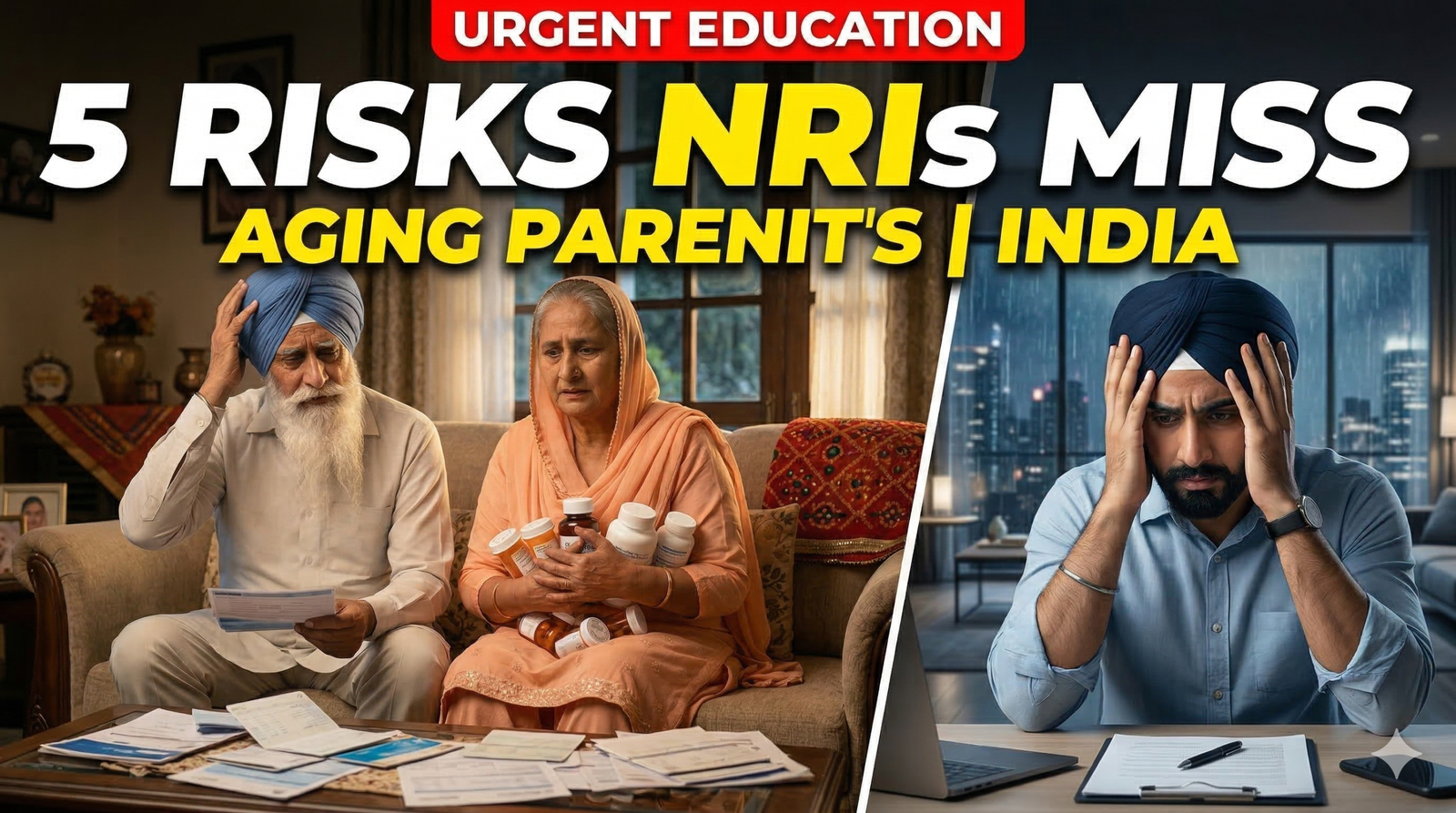
The flight from London, Dubai, or New York back to India is always filled with a mix of anticipation and anxiety. You are excited to see your parents, to eat home-cooked food, and to sit in the living room of your childhood. But beneath that joy is a persistent, gnawing fear: How are they, really?
For many Non-Resident Indians (NRIs), the “check-in” ritual is standardized. It involves daily WhatsApp video calls. You see their faces, they smile, they tell you they are eating well, and they assure you that “everything is fine” (sub theek hai).
You believe them because you need to believe them. It is the emotional sedative that allows you to focus on your career, your children, and your life abroad.
But the 3,000 miles separating you create an invisible filter. This filter screens out the subtle changes, the minor inconveniences, and the slowly creeping dangers that define aging in modern India. The reality is that living alone in India is vastly different from living alone in Toronto or Sydney. The infrastructure, the social fabric, and the emergency response systems differ significantly.
At Blaze Elder Care, we act as the eyes and ears on the ground for hundreds of NRI families. We see what the WhatsApp camera misses.
This article is a wake-up call. It details five critical, often silent, risks your aging parents face living alone in India—dangers that most NRIs completely miss until it is too late.
The Illusion of a Perfect Call: How Distance Blinds You
Before diving into the specific risks, we must address why these risks are missed.
It is a phenomenon known as “Successful Coping Projection.” During your 10-minute daily call, your parents marshal their energy to appear strong and happy for you. They don’t want to worry you. They consider your success abroad their ultimate achievement, and they will go to extraordinary lengths not to disrupt it with tales of a missed meal, a dizzy spell, or the difficulty they had opening a jar.
You see the smiling face (similar to Figure 1, perhaps showing you the familiar living room), but you miss the background context. You miss the medicine cabinet reorganization, the fact that they haven’t left the house in four days, or the slow accumulation of dust in corners they can no longer reach. Distance creates a false sense of security based on curated interactions.
Now, let us examine the reality that exists when the video call ends.
1. The Medical Void: No Response During the “Golden Hour”
This is perhaps the single greatest anxiety for any NRI. In major Western cities, emergency response systems (like 911 or 999) are integrated, standardized, and relatively reliable. If a senior falls, they know who to call, and a paramedics team will arrive with life-saving equipment.
The Reality in India: India lacks a centralized, nationwide emergency dispatch system of the same sophistication. While efforts like 108 exist, the effectiveness varies wildly by state and even neighborhood.
In an emergency—a heart attack, a stroke, or a catastrophic fall—the first 60 minutes are medically known as the “Golden Hour.” Receiving professional treatment within this window drastically increases survival rates and the quality of long-term recovery.
If your father is living alone and experiences a severe stroke that paralyzes his left side, how does he trigger the alarm? He cannot reach the phone. Relying on “good neighbors” is no longer a viable strategy, as urban Indian neighborhoods become increasingly private.
What NRIs Miss: Most NRIs assume that their parents’ driver, maid, or the neighborhood thekedar (attendant) is a replacement for an emergency system. They are not. They are rarely trained in CPR or basic life support.
The urgency here is absolute: Without a proactive, structured SOS and medical response protocol in place before the crisis, your parent is statistically unlikely to receive professional care during that critical first hour.
2. The Slow Decline: Chronic Mismanagement and Nutrition Deficiency
While a sudden heart attack is terrifying, the slow, daily erosion of health due to lack of monitoring is often more destructive. Effective geriatric care is not about handling crises; it is about preventing them through meticulous management.
The Reality in India: Ageing brings polypharmacy—the management of multiple prescriptions for blood pressure, diabetes, arthritis, and cholesterol. Managing these protocols requires cognitive sharpness and physical dexterity.
Many seniors living alone mismanage their medication. They skip doses because they forgot or because the pills are expensive. They double-dose because they forgot they already took it. They take outdated prescriptions.
Nutrition is another hidden risk. Cooking a fresh, healthy meal three times a day requires significant energy. Many seniors living alone in India revert to the “tea and toast” diet. It’s easy, but it leads to rapid weight loss, muscle atrophy (sarcopenia), and a weakened immune system, which in turn increases the risk of the falls mentioned earlier.
What NRIs Miss: A parent will never tell you on a video call that they skipped their heart medication or that they were too tired to cook and just had biscuits for dinner. They may look slightly thinner, but the change is so gradual you attribute it to normal aging, not preventable malnutrition. You assume they are being monitored by the domestic staff, but the maid’s job is to clean, not to assess dietary health or medication adherence.
3. The Psychological Danger: Crushing Emotional Isolation
The joint family system was India’s traditional answer to loneliness in old age. That system has largely collapsed in urban centers. Your parents are the pioneers of the Indian “empty nest.”
The Reality in India: Loneliness is not just a feeling; it is a clinical risk factor. The World Health Organization has declared social isolation a major global health risk, linking it directly to depression, anxiety, a 50% increased risk of dementia, and a significant increase in the risk of stroke and heart disease.
The culture around them has changed. Old friends may have passed away or relocated. The busy urban landscape of cities like Chandigarh or Gurgaon can feel isolating and intimidating rather than connecting.
What NRIs Miss: You believe your daily video call is sufficient companionship. It is not. A video call is an artificial interaction. It cannot replace physical presence, shared activity, or local social connections. When the call is over, the silence in the house is deafening. They have no reason to get dressed, no place to go, and nothing new to discuss. The mental atrophy caused by isolation accelerates cognitive decline rapidly.
4. The Threat Within: Hiring Unverified and Untrained Help
To solve the daily monitoring problem (Risk 2), most NRIs hire “help.” They may hire a full-time maid or an elderly attendant. In many cases, these individuals are hired based on a loose recommendation from another servant or a distant relative, with zero professional vetting.
The Reality in India: Hiring untrained domestic staff poses two severe risks:
Safety/Security: Abuse of the elderly is a rampant, dark reality. This abuse can be financial (slowly siphoning money), emotional (manipulation), or even physical.
Lack of Care Expertise: Even a well-meaning maid is not a geriatric caregiver. They do not know how to safely transfer a senior with mobility issues (preventing falls), they cannot spot the early signs of a stroke, and they cannot manage complex medication protocols. They are servants, not caregivers.
What NRIs Miss: Because the help is often affectionate during your brief calls (or Figure 1 shows the parents smiling in a comfortable setting you assume they are managing), you assume the relationship is professional and safe. You prioritize the financial comfort of hiring full-time help over the security and expertise required for true care. You miss the subtle manipulation that often occurs when a vulnerable senior becomes overly dependent on one untrained individual.
5. Security Risks and the Vulnerability of Property
If your parents are like most middle-to-upper-class Indians, they are “asset rich but cash poor.” They own a valuable home or apartment in a metro city.
The Reality in India: This makes them prime targets. Seniors living alone are vulnerable to physical crimes (theft, burglary) simply because they cannot defend themselves. Modern residential societies try to address this, but many older parents live in independent houses (kothis) that are harder to secure.
More insidious, however, is financial and property exploitation. Seniors are frequently targets for scams, including sophisticated online fraud and pressure tactics related to property disputes or inheritance. They are often less digitally literate, making them easy marks.
What NRIs Miss: You assume their physical safety because you bought them a fancy lock or live in a “good area.” But you cannot buy security against fraud. You miss the complexity of managing large properties in India—dealing with aggressive builders, disputing utility bills, or handling tricky tenants. Your parents bear this stress alone, and the resultant anxiety severely impacts their health, creating a vicious cycle of stress and decline.
Conclusion: Stop Reacting and Start Prescribing Care
The guilt of living away from aging parents is a universal NRI experience. The purpose of this list is not to deepen that guilt, but to replace it with informed urgency.
Relying on “hope” and the facade of the “perfect WhatsApp call” is no longer a viable care strategy. The traditional, organic support systems that once protected seniors in India have eroded. If you are waiting for an emergency—a 2 AM panic call from a frantic neighbor—to trigger your intervention, you are playing a high-stakes game with your parents’ lives.
Proactive Care is the Only Solution.
You have built a successful life abroad. Your parents made that possible. It is now your responsibility to build a secure, structured, and dignified care ecosystem for them back home.
A structured care plan involves professional geriatric assessments, verified expertise (like the structured check-in shown in Figure 2), immediate medical response protocols, social engagement, and dedicated case management. It is about bridging the 3,000-mile gap with professional certainty.
Your love is best expressed not just through expensive gifts or 10-minute video calls, but through the structure and security you provide for their final, most vulnerable years.
Don’t wait for a crisis to define your parents’ future. Take control. Schedule a free consultation with Blaze Elder Care today to discuss how we can create a customized, proactive care plan that brings true security to your parents and profound peace of mind to you.